
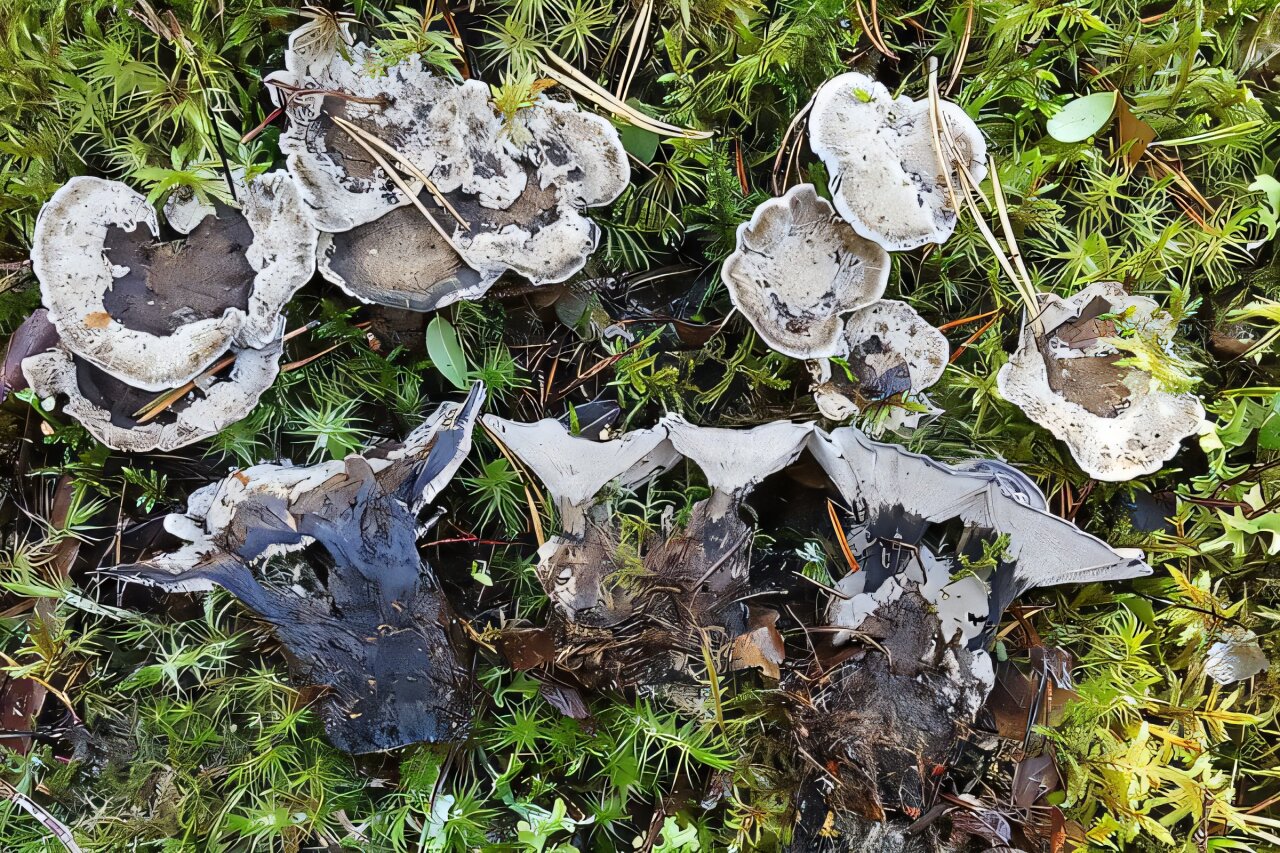

In a remarkable discovery highlighting the hidden richness of fungal biodiversity, a researcher from Uppsala University has identified four previously unknown mushroom species—three of which are native to Sweden and already facing the risk of extinction.
Sten Svantesson, affiliated with the Department of Organismal Biology and the Museum of Evolution at Uppsala University, made the discovery in collaboration with researchers from Gothenburg and the United Kingdom. The newly identified mushrooms belong to the Phellodon genus, a group of hydnoid fungi known for their ecological importance.
“These fungi are particularly intriguing because of the symbiotic relationships they form with forest trees,” Svantesson explains. “They assist trees in absorbing nutrients and water, yet they remain largely unstudied and are rarely observed in the wild. This makes them part of what we refer to as ‘hidden biodiversity.’”
Despite their physical resemblance to known species, the new Phellodon fungi can be distinguished by subtle differences in habitat and ecological preferences. The findings have been published in the journal Fungal Systematics and Evolution.
Ecological Significance and Symbiotic Lifestyle
The four newly discovered species demonstrate a variety of ecological preferences—some thrive in calcareous beech forests, while others prefer the acidic soils of pine bogs. However, one critical commonality links them all: their dependence on old-growth forests.
“Their survival is tightly bound to undisturbed, ancient woodlands,” says Svantesson. “Unfortunately, these are precisely the types of forests under threat from clear-cutting practices. Such ecosystems, which we refer to as continuity forests, are rich in biodiversity and far more resilient in the face of environmental disturbances—something we desperately need as the climate crisis intensifies.”

Potential for Antibiotic Discovery
Beyond their ecological value, these fungi may also hold promise for human health. Svantesson notes that known Phellodon species have yielded compounds with antibiotic properties, suggesting that their newly discovered relatives could offer similar benefits.
“It would be a great tragedy if we were to lose a species that might hold the key to future medical breakthroughs—before we even have the chance to study it,” he warns.
This discovery not only underscores the importance of preserving natural habitats but also reminds us of the untapped potential lying quietly within the forest floor.
